
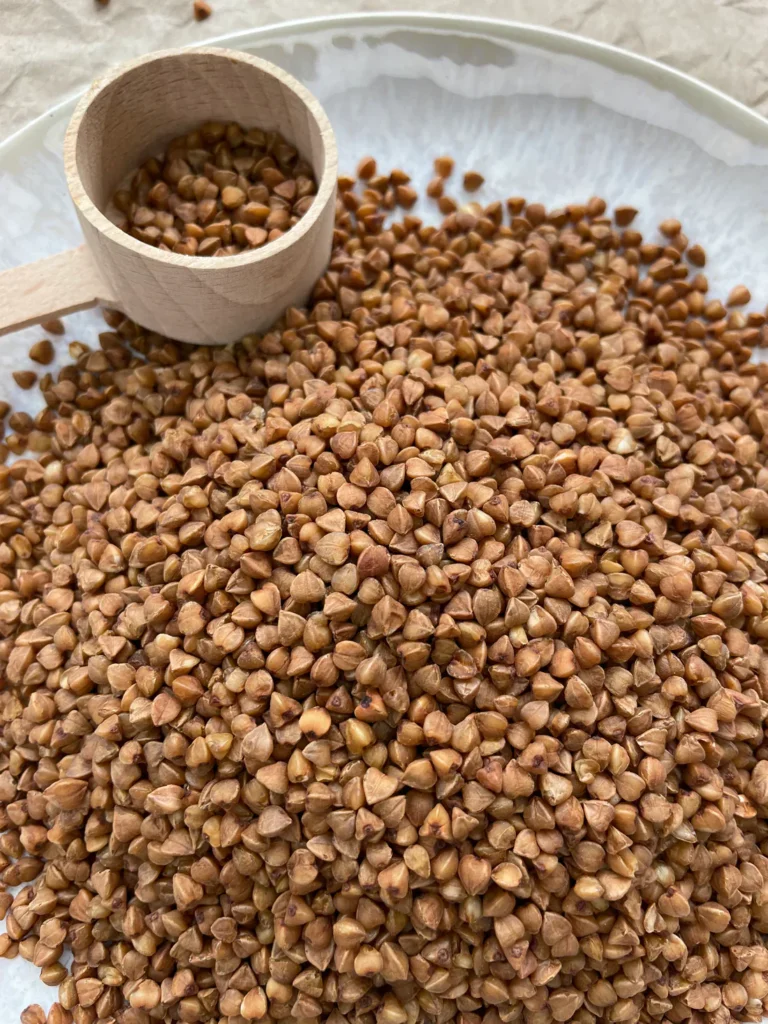
Buckwheat
Buckwheat (Fagopyrum esculentum) is a fast-growing pseudo-cereal, not a true grass grain, but a fruit seed related to rhubarb and sorrel. It is gluten-free, highly nutritious, and cultivated globally for its triangular seeds (groats).
Key Specifications & Details:
Botanical & Physical: An annual plant producing small, pyramid-shaped seeds (“groats”). The outer hull is dark brown or black, removed to reveal light tan inner groats, which can be sold whole, cracked, or milled into flour.
Nutritional Profile: A complete protein containing all nine essential amino acids, especially rich in lysine. High in complex carbohydrates, dietary fiber, and minerals like manganese, magnesium, copper, and iron. It also contains beneficial antioxidants, notably rutin.
Culinary Uses: Whole roasted groats are known as kasha, a staple in Eastern European cuisine. Buckwheat flour is essential for Japanese soba noodles, Breton galettes, and various pancakes, breads, and gluten-free baked goods.
Agricultural Benefits: A short-season crop (70-90 days) that thrives in poor, acidic soils. It suppresses weeds, improves soil health, and is an excellent honey plant for pollinators.
Major Producers: Russia is the largest global producer, followed by China, Kazakhstan, and Eastern European countries. Significant production also occurs in North America and France (Brittany).
Processing: Harvested seeds are dehulled. The groats can be steamed and roasted (for kasha) or ground into light (refined) or dark (whole-grain) flour.